

The top 10 crypto exchanges put together are processing over $200 billion in trades every single day. To put that in a way that makes sense — that number is bigger than the entire yearly GDP of most African countries, moving in just 24 hours.
But here is the thing: the big numbers are not the real story. The real story is what those numbers tell you about where the money is sitting, which exchanges are winning the trust of serious traders, and — most importantly for you — which platforms a Nigerian trader can actually use, fund, and withdraw from without drama.
Because a lot of people in Lagos, Abuja, and Port Harcourt have found out the hard way: being ranked number one in the world does not stop an exchange from freezing your local trading pair overnight.
This post breaks down the top 10 exchanges by volume in 2026, explains what each one means in plain language, and tells you exactly which ones matter — and which ones don’t — if you are trading from Nigeria.
Why Exchange Volume Rankings Changed So Much Between 2022 and 2026
To understand the current rankings, you need to go back to November 2022. That is when a big exchange called FTX collapsed completely — almost overnight.
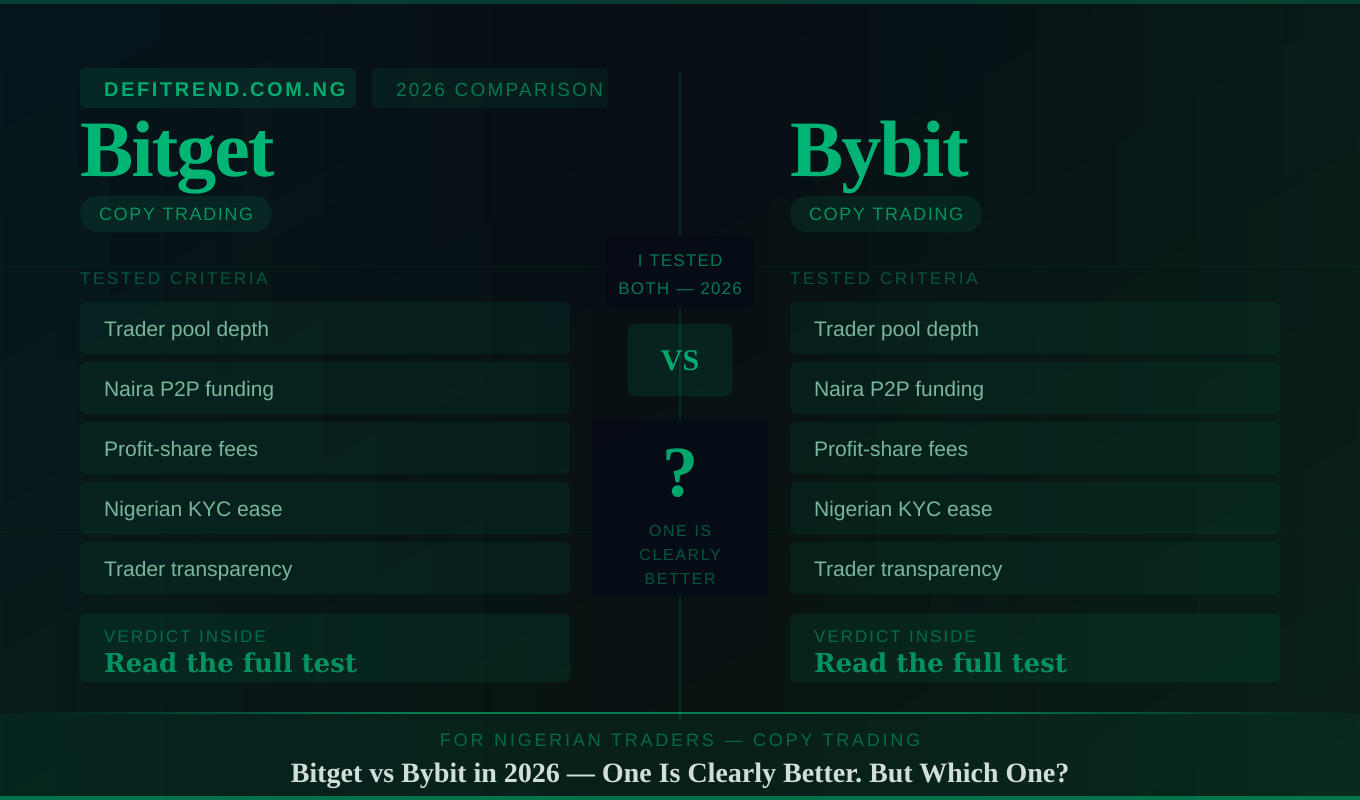
Binance vs Bybit in 2026 — A Nigerian Trader’s Honest Breakdown of Which Exchange Actually Delivers
FTX was one of the biggest exchanges in the world. When it went down, millions of people could not get their money out. It was one of the biggest financial disasters in crypto history. After FTX collapsed, most of the traders who were using it moved their money to other platforms. The biggest winner was Binance, which went from roughly 50% market share to nearly 65% of global volume almost immediately, according to TokenInsight’s 2022 annual report.
The lesson people took from FTX: go with the exchange that has the most volume and the most liquidity — because when things get hard, liquidity is what keeps you from being trapped.
Then in 2023, Binance itself went through its own storm. The US Department of Justice hit Binance with a $4.3 billion settlement. The founder, CZ, stepped down as CEO. A lot of people expected Binance to fall apart. Instead, the opposite happened — cleaning up its compliance actually made bigger institutions more comfortable using it. Compliance became a sign of trust.
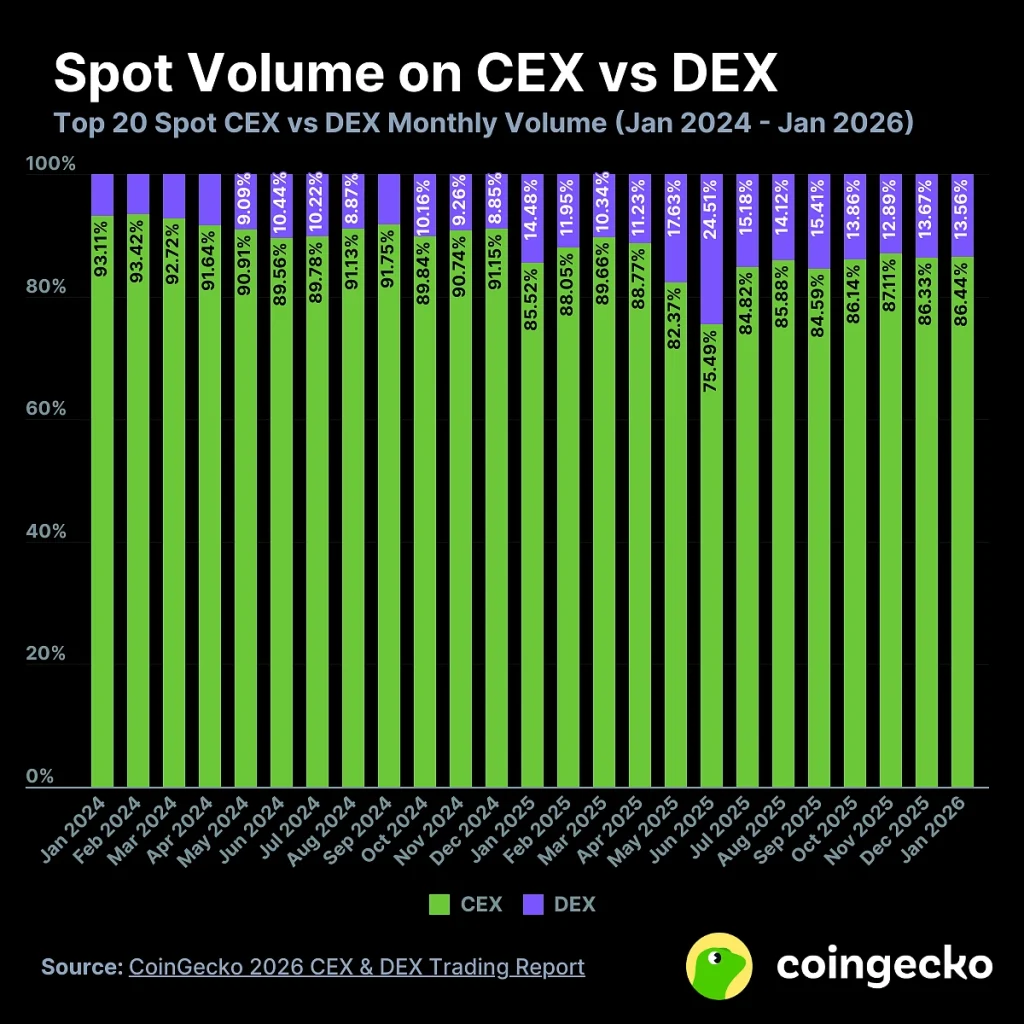
Fast forward to 2025 and 2026: decentralized exchanges (DEXs — platforms where you trade directly from your wallet, with no company in the middle) now handle roughly 21.7% of all crypto spot volume, up from around 10% in 2024. The big centralized exchanges (CEXs) still dominate, but their grip is slowly loosening.
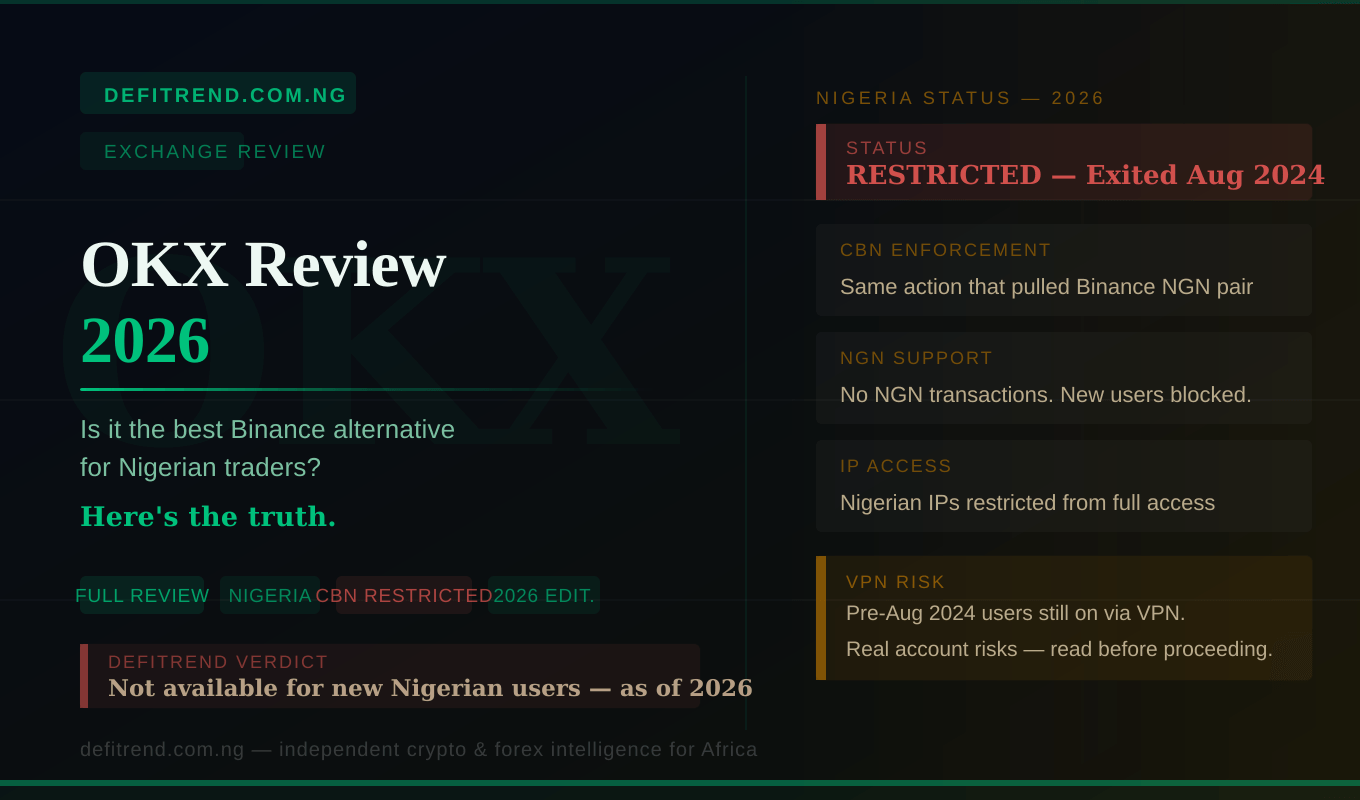
And for Nigerian traders specifically? The 2024 Binance NGN P2P suspension taught a lesson that still matters in 2026: volume rank number one does not mean accessible number one.
Top 10 Crypto Exchanges by Volume in 2026 — Ranked and Rated
Here is the list, in plain language, with a verdict for every exchange that is honest about what it means for you as a Nigerian or African trader.
1. Binance

What it is: The largest crypto exchange in the world. By a lot.
The numbers: According to CoinGecko’s full-year 2025 data, Binance had a 39.2% share of all centralized exchange spot volume — a total of $7.3 trillion for the year, out of a combined $18.7 trillion across the top 10. In Q1 2026, CoinGlass data shows Binance held approximately 34.9% of derivatives volume among the top ten exchanges, with roughly $4.90 trillion in cumulative Q1 derivatives trading. User assets held on Binance represent approximately 73.5% of all major CEX reserves combined. Those are staggering numbers.
Why it matters: More volume means tighter spreads. When you buy USDT on Binance, you are getting a better price than you would on a smaller exchange, simply because there are more buyers and sellers competing.
Nigerian trader verdict: This is complicated. Binance removed all NGN services — deposits, withdrawals, and Naira P2P pairs — in February/March 2024 after the Nigerian government accused it of currency manipulation. As of 2026, the legal case between Binance and the Nigerian government is still ongoing in the Federal High Court in Abuja. The Binance website is frequently blocked by Nigerian telecoms and requires a VPN to access. For crypto-to-crypto trading, it still works for Nigerians with existing verified accounts. But for NGN on-ramp and off-ramp? You need other options. Never run a single-exchange operation.
2. Bybit

What it is: The second-largest exchange globally, and the one growing fastest in the areas that matter most for active traders.
The numbers: Bybit ended 2025 as the second-largest centralized exchange with a 9.5% spot market share and $90 billion in December 2025 volume alone, according to CoinGecko. In Q1 2026, Bybit ranked third in derivatives volume globally. It now has over 80 million registered users worldwide.
Notable: In February 2025, Bybit was hit with the largest crypto hack in history — approximately $1.5 billion worth of ETH was stolen. Bybit replenished its reserves from its own balance sheet within 72 hours. No customer lost money. Bybit now publishes monthly Merkle-tree Proof of Reserves verified by an independent auditor.
Nigerian trader verdict: Bybit is currently the best primary exchange option for Nigerian traders. It has an active NGN P2P marketplace and has not faced the same level of legal action as Binance in Nigeria. It is also the top choice for derivatives trading and copy trading — better interface, more rigorous trader verification, and built-in risk controls.
3. MEXC
What it is: A fast-growing exchange that has jumped to the top of the rankings by offering zero maker fees on spot trading — meaning you pay nothing to place a limit order.
The numbers: MEXC was the fastest-growing exchange in 2025, growing 90.9% year-on-year, with $1.5 trillion in 2025 volume, according to CoinGecko. It supports over 2,000 cryptocurrencies — one of the widest selections of any exchange.
Nigerian trader verdict: MEXC supports NGN P2P trading with multiple Nigerian payment methods including bank transfer, PalmPay, and OPay. The zero maker fee model is particularly good if you are a patient trader who places limit orders. FXEmpire lists MEXC as one of the best exchanges for Nigerian traders specifically for low fees and NGN P2P support. It is not as well-known as Binance or Bybit, but for cost-conscious traders it is worth having an active account here.
4. Gate.io

What it is: A large exchange headquartered in the Cayman Islands, known for listing new coins faster than most top exchanges and running a solid P2P marketplace.
The numbers: Gate ranked second in spot volume in Q1 2026, with approximately $201.4 billion in cumulative Q1 spot volume according to CoinGlass — ahead of Bybit and Coinbase in that period.
Nigerian trader verdict: Gate.io operates in Nigeria, though the website is blocked and most users access it through the mobile app. It does offer P2P trading for Nigerian users, but tends to attract more experienced traders due to its complex interface. Good for altcoin discovery and P2P as a backup rail. New traders should get comfortable on Bybit or MEXC first before moving here.
5. OKX

What it is: A Hong Kong-headquartered exchange that is one of the strongest platforms for both spot and derivatives trading globally, with a well-built Web3 wallet and DEX tools.
The numbers: OKX’s derivatives volume hit $1.3 trillion in September 2025 — overtaking Binance in derivatives for the first time that month, according to CoinLaw data. In Q1 2026, OKX ranked among the top five globally in both spot and derivatives volume.
Nigerian trader verdict: Massively underused by Nigerian traders relative to its size and product quality. OKX has a P2P desk that is worth exploring as a Binance backup for USDT/NGN. Its spot fees start at 0.08% maker / 0.10% taker — competitive with the best in the market. If you are an intermediate trader who wants more tools, OKX deserves serious attention.
6. Coinbase

What it is: The only major crypto exchange publicly listed on a US stock exchange. The most regulated, most compliant exchange in the world for US users.
The numbers: Coinbase ranks first in US crypto volume with approximately $234 billion in quarterly volume, accounting for 41% of North America’s crypto activity, according to CoinLaw. Its volumes surged 28% year-on-year in 2025.
Nigerian trader verdict: Coinbase is not available in Nigeria — the platform does not support Nigerian users due to regional restrictions. It has no NGN P2P support and no direct naira services. For most Nigerian traders, Coinbase is not relevant for day-to-day activity. However, if you are planning to move into US-regulated investment products like Bitcoin ETFs or institutional-grade structured products in the future, knowing Coinbase exists and understanding its role in the institutional market matters.
7. Kraken

What it is: A US-based exchange with one of the strongest security track records in crypto. Known for being boring in the best possible way — reliable, compliant, and transparent.
The numbers: Kraken processed approximately $102 billion in Q3 2025 volume with a 3.6% global market share, according to CoinLaw. It dominates euro-based trading pairs and is the top choice for European institutional traders.
Nigerian trader verdict: Limited direct relevance for NGN P2P trading — Kraken does not support Nigerian Naira. But for experienced Nigerian traders moving into OTC desks, futures, or wanting a highly secure second exchange for long-term holdings, Kraken is worth knowing. Its proof of reserves is one of the most transparently published in the industry.
8. Bitget
What it is: A Seychelles-registered exchange that rose quickly on the back of strong derivatives and copy trading features, and has been actively expanding across Africa and Southeast Asia.
The numbers: Bitget rose to the fifth spot in derivatives trading globally in Q3 2025, with over $250 billion in quarterly derivatives volume, according to CoinLaw. It is a top-15 exchange by most volume metrics.
Nigerian trader verdict: Bitget’s P2P section supports NGN and is gaining ground among Nigerian traders, particularly those who trade coins beyond the top 10. Breet.io’s 2026 Nigeria exchange ranking lists Bitget as a functional option for Nigerian traders who want altcoin access alongside naira P2P. The zero-fee P2P structure is a real advantage. Keep positions moderate — compliance infrastructure is not as deep as Binance or Kraken.
9. KuCoin
What it is: A Seychelles-based exchange that built its reputation on listing new altcoins early — often weeks or months before Binance and OKX add them.
The numbers: KuCoin recorded over $1.25 trillion in total trading volume in 2025 — its strongest year on record, growing faster than the wider CEX market average.
Nigerian trader verdict: KuCoin has historically been popular among Nigerian traders for altcoin access. However, NGN P2P support on KuCoin has become less consistent over time, according to Cubex’s 2026 Nigeria analysis. It is useful for finding new coins early, but its regulatory standing is weaker than the top-tier exchanges. Keep any positions here small — it is a discovery tool, not a primary trading home.
10. Crypto.com
What it is: A Singapore-headquartered exchange with a strong consumer brand — you probably know it from Super Bowl ads and sports sponsorships. The trading product sits behind the marketing, but it is a functional platform.
How to Start Forex Trading for Beginners: A Step-by-Step Guide 2026 (No Experience Needed)
The numbers: Crypto.com’s daily volume sits in the $2.7–$2.9 billion range — solid, but noticeably thinner than the top five.
Nigerian trader verdict: Decent app for beginners who want a clean interface to buy and hold Bitcoin or USDT. Limited NGN P2P options. For most Nigerian traders doing active trading or P2P, Crypto.com is not the right primary platform. It is more useful as a simple holding wallet for someone just getting started with crypto.
How to Use This List as a Nigerian Trader
Three signals that actually matter:
Signal 1 — Volume means tighter prices. The exchanges with the most volume have the most buyers and sellers. That means when you want to buy USDT for NGN, a high-volume exchange will give you a better rate than a low-volume one — because there is more competition between sellers. This is why Binance’s P2P had better rates than most alternatives when it was active.
Signal 2 — Concentration risk is real. Four exchanges control roughly 70% of all global crypto volume. If any one of them has a regulatory problem — like Binance in 2024 — it moves the entire market. The practical response: maintain active, verified accounts on at least two top-five exchanges. Bybit and MEXC together give you a solid foundation right now for Nigerian-accessible trading.
Signal 3 — DEX volume is growing and you should pay attention. Decentralized exchanges now handle about 21.7% of all crypto spot trading volume globally in 2025. These are platforms where you trade directly from your wallet — no company holds your funds, no KYC required for most trades. For Nigerian traders who face friction with centralized exchange KYC or banking restrictions, platforms like Uniswap and PancakeSwap are becoming genuine alternatives for USDT on-chain swaps.
“Volume rank does not equal safety rank. Always check proof of reserves, verify regulatory standing, and never keep more on any exchange than you are actively trading. FTX was a top-10 exchange by volume the day before it collapsed.”
What This Volume Leaderboard Looks Like From Lagos
Here is what no international ranking post tells you — the practical on-the-ground picture for Nigerian traders in 2026.
Of the entire top 10 list above, only three or four exchanges have meaningful NGN P2P access right now: Bybit, MEXC, Bitget, and Gate.io (via app). Binance — the biggest exchange in the world — removed NGN functionality in 2024 and the situation has not been resolved. Coinbase is not available in Nigeria at all. Kraken has no NGN support. Crypto.com has limited P2P options.
This access gap is the single most important thing a Nigerian trader needs to understand about the volume rankings. The exchanges at the top of the global leaderboard are not always the exchanges you can use most effectively from Lagos.
The CBN’s regulatory stance has evolved significantly. In 2024, the National Security Adviser classified crypto trading as a national security issue — leading to fintech platforms including OPay, Moniepoint, and PalmPay being temporarily ordered to restrict crypto-linked accounts. Since then, the framework has shifted toward structured regulation. By 2026, all Nigerian crypto transactions on licensed platforms require Tax Identification Number (TIN) and National Identification Number (NIN) for KYC compliance. Quidax became the first Nigerian SEC-licensed exchange in 2024, offering a regulated local alternative to offshore platforms.
Crypto Trading for Beginners Guide (Start the Right Way)
For the exchanges that are still accessible, USDT remains the functional currency. USDT/NGN is the pair that connects the global crypto market to the Nigerian economy for most retail traders. The rate you get on that pair — the spread between buy and sell prices — is directly determined by merchant depth and volume. Bybit and MEXC currently have the most functional NGN P2P infrastructure of any globally-ranked exchange.
The smartest setup for a Nigerian trader in 2026: Bybit as your primary, MEXC as your secondary for zero-fee spot and NGN P2P, and a locally licensed platform like Quidax or Busha for fiat-to-crypto when you want SEC Nigeria oversight behind your transactions.
My Read on Where This Goes From Here
The top 10 list is less interesting than the direction things are moving.
Bybit is closing the gap on Binance faster than most people realize — especially in derivatives. MEXC’s zero-fee model is pulling volume upward faster than almost any other platform (90.9% growth in 2025 alone). And DEX volume climbing to 21.7% is the slow-motion story that not enough people are taking seriously.
By the end of 2026, I expect either OKX or Bybit to overtake Coinbase for the global number-two position in combined spot-and-derivatives volume. And at some point, one of these top-ten exchanges is going to make a genuine, public move into the Nigerian retail market with a local entity and SEC Nigeria registration — at which point the entire P2P landscape here changes overnight.
Watch the P2P merchant count on Bybit and MEXC. Watch the SEC Nigeria registration list. Those two signals will tell you more about the future of crypto in Nigeria than any global ranking table.
Which exchanges are you using right now — and which ones have given you the most headaches from Nigeria? Drop it in the comments. Subscribe to the Defitrend brief for our monthly exchange tracker built specifically for African traders.
Disclosure: This article is for informational purposes only and does not constitute financial or investment advice. Always do your own research before depositing funds on any exchange.





Leave a Reply